
ORAL HYGIENE AND PREVENTION
Oral health begins with prevention
Professional hygiene and maintenance of oral health
Professional oral hygiene is the first step in maintaining healthy teeth, gums, and supporting tissues over time.
Through periodic checks and customized prevention protocols, it is possible to reduce the risk of tooth decay, gum disease, periodontal disease, and many other conditions that can compromise oral health.
Book your specialist visit.
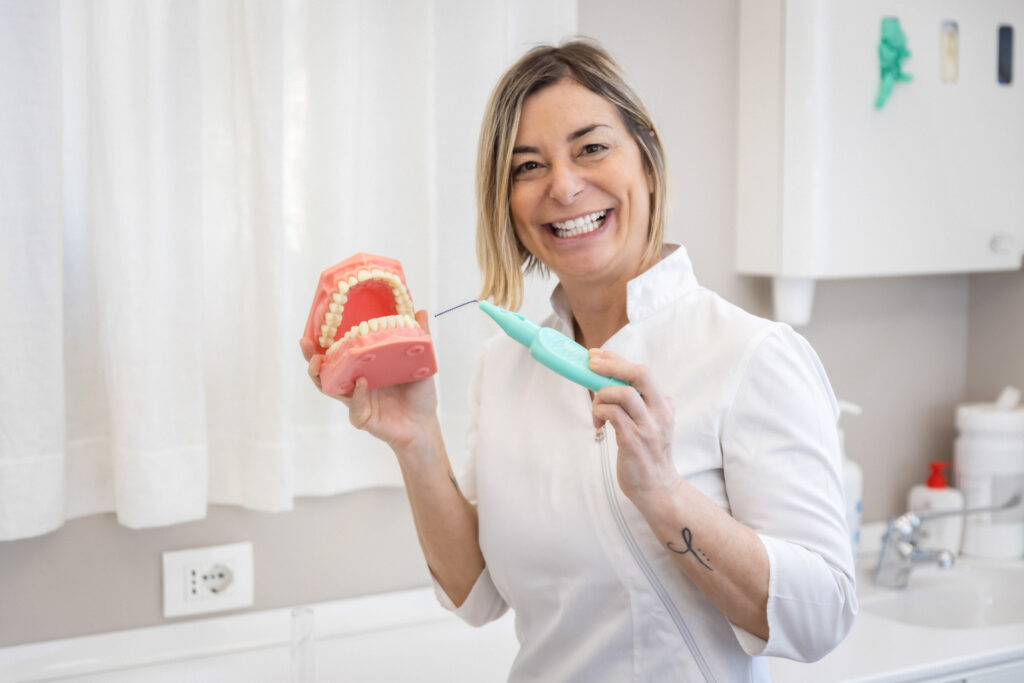
Why? professional hygiene is so important ?
Even with proper home hygiene, plaque and tartar tend to accumulate in areas that are difficult to reach with a toothbrush and interdental brush.
Over time, these deposits can favor the onset of gum inflammation, tooth decay, and periodontal diseases.
Professional hygiene allows for the effective removal of these accumulations and for the continuous monitoring of the oral cavity’s health status.
Professional oral hygiene Recrea
A maintenance program for oral health
Prevention is one of the most effective tools of modern dentistry.
Regular professional hygiene sessions allow for:
Maintain healthy gums
Reduce the risk of tooth decay
Preventing periodontal disease
Preserving natural teeth, implants and dentures
contribute to the stability of the results obtained with other dental treatments
keep a brighter and more cared-for smile
A personalized approach to prevention
Each patient has different needs.
For this reason, our protocol does not limit itself to the simple removal of plaque and tartar, but includes a comprehensive assessment of oral health and individual risk factors.
The goal is to detect any problems early and intervene before they require more complex treatments.
During each appointment, the following are monitored:
- state of health of the gums;
- presence of plaque and tartar;
- any initial signs of tooth decay;
- conditions of existing restorations;
- periodontal risk;
- quality of home hygiene.
How it works
The treatment
-01
First visit and hygiene session
During the appointment, we perform an assessment of your oral health and proceed with the most appropriate professional hygiene treatment for your needs.
When necessary, the professional can suggest diagnostic insights or specific prevention paths.
-02
Case study
Based on the patient's clinical characteristics, we define the frequency of periodic follow-up visits.
The intervals can be quarterly, semi-annual or customized depending on individual risk and the presence of any pre-existing pathologies.
Maintaining oral health over time is one of the most important components.
If you have any others questions
Read here everything there is to know
I am afraid of pain
In the presence of particular dental sensitivity or gum inflammation, specific protocols may be adopted to further improve the patient’s experience.
No.
In the presence of particular dental sensitivity or gum inflammation, specific protocols may be adopted to further improve the patient’s experience.
How often should I do dental hygiene?
For many patients, a check-up every six months is advisable, but some may benefit from more frequent check-ups.
There is no one-size-fits-all answer.
The ideal frequency depends on individual factors such as susceptibility to tartar formation, the state of the gums, the presence of implants, dentures, or previous periodontal problems.
For many patients, a check-up every six months is advisable, but some may benefit from more frequent check-ups.
Does professional hygiene ruin the enamel?
If performed correctly by qualified professionals, professional hygiene does not damage tooth enamel.
No.
If performed correctly by qualified professionals, professional hygiene does not damage tooth enamel.
On the contrary, it helps preserve the health of the teeth and gum tissues.
Is it useful even if I brush my teeth well every day?
Home hygiene is essential but it does not allow you to completely eliminate tartar or reach certain particularly difficult areas.
Absolutely yes.
Home hygiene is essential but it does not allow you to completely eliminate tartar or reach certain particularly difficult areas.
The two activities are complementary and essential for maintaining a healthy mouth.
Do I have implants or prostheses: do I need to follow professional hygiene procedures?
Patients who have implants, crowns, or prostheses often require specific maintenance programs to preserve the health of the tissues and the stability of the restorations over time.
Yes.
Patients who have implants, crowns, or prostheses often require specific maintenance programs to preserve the health of the tissues and the stability of the restorations over time.
Can I do the whitening during the same session?
Before any whitening treatment, it is generally advisable to undergo a professional hygiene session.
Before any whitening treatment, it is generally advisable to undergo a professional hygiene session.
A clinical evaluation will allow us to determine the most appropriate course of action to achieve the best aesthetic result.